Back
23.25° N  ·  77.40° E  ·  Malwa Plateau

Madhya Pradesh · Chapter One

Bhopal

भोपाल · झीलों का नगर

Zardozi gold embroidery, the Nawabi craft legacy, and India's most significant tribal material museum.

23.25° N  ·  77.40° E  ·  Malwa Plateau

Bhopal is a city of lakes and layered histories — Nawabi Islamic architecture in the old city, a colonial British cantonment, and around it all, the forests and tribal communities of central MP. It is both the seat of the Nawabs of Bhopal's elaborate material culture and the location of India's most comprehensive tribal craft museum.

I

Chapter One

The Nawabi City — Zardozi & Gold Thread

नवाबी शिल्प · जरदोज़ी की महक

Bhopal was ruled by the Nawabs of Bhopal from the 18th century until Indian independence — and uniquely, four of its last rulers were women: the Begums of Bhopal. Their rule produced a sophisticated material culture that mixed Islamic craft traditions with central Indian resources. Zardozi embroidery — gold and silver thread work on velvet and silk — is the primary craft legacy of this period.

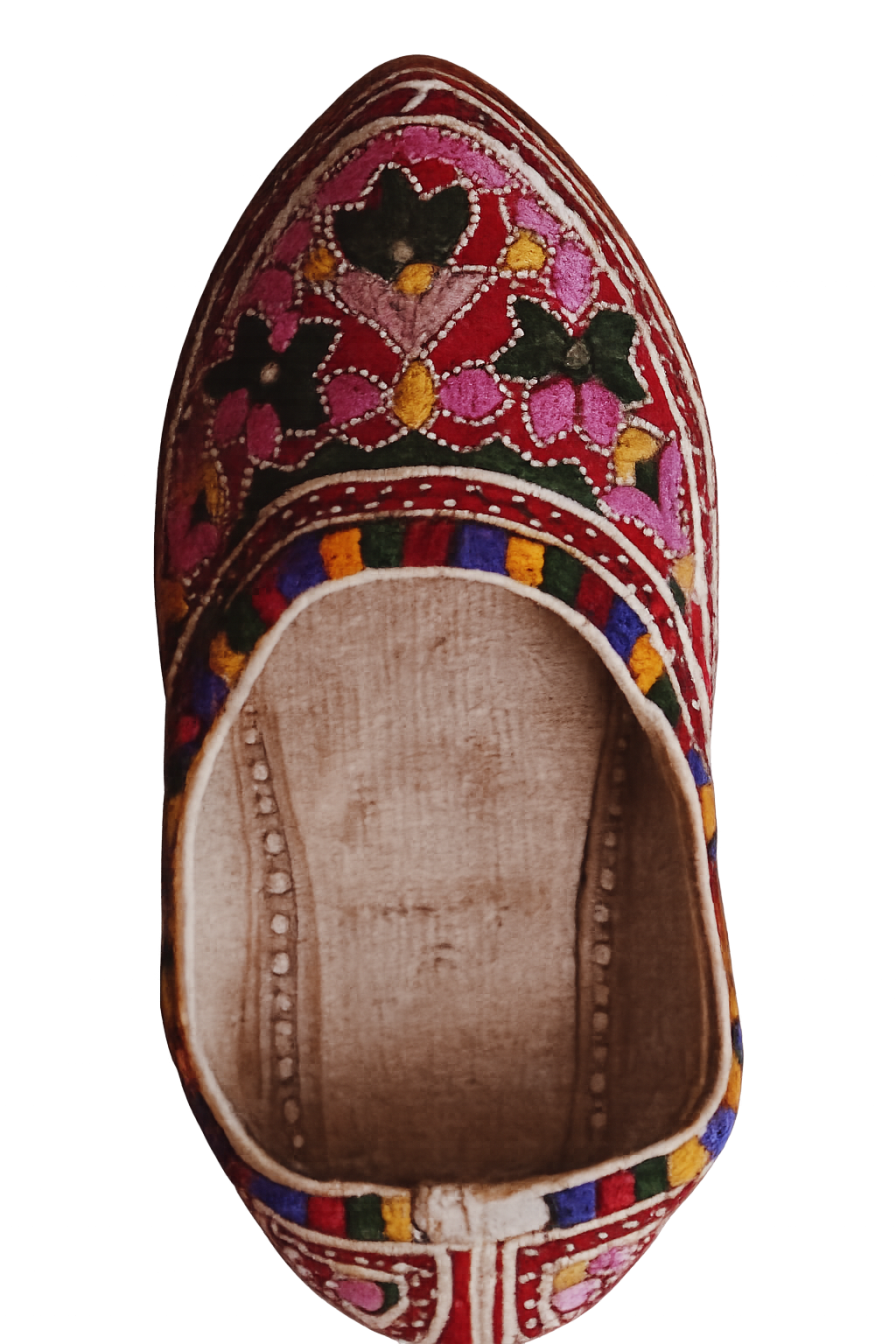
Zardozi uses metal-coated threads, sequins, and wire coils stitched onto fabric in patterns of flowers, arabesque geometry, and scrollwork. It appears on bags, footwear, garments, and furnishing objects. Bhopal zardozi is known for its dense relief — the stitching builds up into a three-dimensional surface rather than lying flat.

The Begums of Bhopal built mosques and managed armies. They also built an embroidery tradition that required the finest hands in the city and the most expensive threads available. Power expresses itself in material. The gold thread is political.
II

Chapter Two

Rashtriya Manav Sangrahalaya — The Tribal Archive

राष्ट्रीय मानव संग्रहालय · जीवित विरासत

The Rashtriya Manav Sangrahalaya (National Museum of Mankind) in Bhopal holds the most significant collection of Indian tribal architecture and material culture in the country. Its outdoor galleries include full-scale reconstructions of tribal dwellings — Gond houses, Bhil painted huts, Bastar wooden architecture — built by craftspeople from the communities themselves.

The museum's collection documents material culture in use: tools, textiles, musical instruments, ritual objects, agricultural implements, and craft equipment from 30+ tribal communities of central India. It is both an archive and an argument — that tribal material culture is not primitive but sophisticated, not disappearing but adaptable.

The RMS was built on the principle that the best way to understand tribal material culture is to experience it at full scale, in its original form, made by the people who know it. The museum's buildings are not replicas. They are the thing itself, placed in a new context.
  • Zardozi embroidery
  • Bhopal jari work
  • Tribal architecture museum
  • Gond house construction
  • Bhil pithora documentation
III

Chapter Three

Chikan & Nawabi Textile Legacy

चिकनकारी · मलमल का काम

The Nawabi court of Bhopal adopted chikankari — white-on-white embroidery on fine muslin — from the Awadhi textile tradition of Lucknow. Bhopal chikankari is less famous than Lucknow's but maintains its own characteristics: a slightly heavier ground fabric, a preference for larger motifs, and a tradition of combining chikan with zardozi on formal garments.

The overlap between the Islamic embroidery tradition and the textile workshops of central MP created a distinctive Bhopal aesthetic: Nawabi ornament on Deccan cotton. The craft is now primarily maintained by Muslim embroidery families in the old city around Chowk Bazaar and Hamidia Road.

Bhopal chikankari is white thread on white cloth. The design is invisible until the light falls at the right angle. This is not humility — it is precision. The embroiderer makes something that only appears when circumstances allow it. The restraint is the point.
Bhopal: The craft
Bhopal — the craftWikimedia Commons
Bhopal: Material
Bhopal — materialWikimedia Commons
Bhopal: Detail
Bhopal — detailWikimedia Commons

यत्र राजसत्ता और जनजाति साथ बैठते हैं

where court and tribe sit together.